راهاندازی جدیدترین کوئست هوش مصنوعی گوگل با موضوع نقشهبرداری از مغز انسان
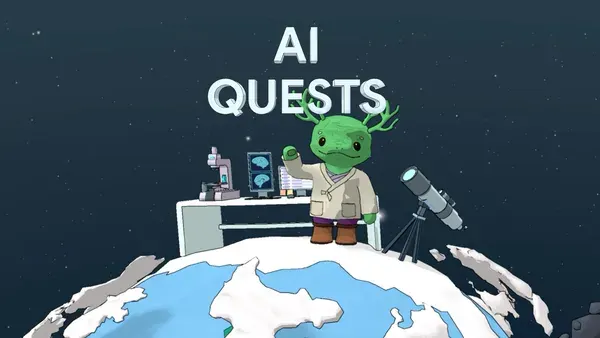
گوگل کوئست جدیدی به نام «قلههای قطبی» را برای آموزش هوش مصنوعی به دانشآموزان منتشر کرد. این برنامه تعاملی به دانشآموزان اجازه میدهد تا با الهام از تحقیقات علوم اعصاب، ساختار نورونهای مغز را بررسی کنند.
گوگل سومین کوئست خود در مجموعه کوئستهای هوش مصنوعی را با نام «قلههای قطبی» راهاندازی کرد. این برنامه با همکاری گوگل ریسرچ و شتابدهنده استنفورد برای یادگیری دانشآموزان ۱۱ تا ۱۴ ساله طراحی شده است تا نحوه کارکرد هوش مصنوعی و استفاده مسئولانه از آن را آموزش دهد.
در این کوئست جدید، دانشآموزان به مرزهای علوم اعصاب سفر میکنند تا ببینند هوش مصنوعی چگونه میتواند تحقیقات علمی را تسریع بخشد. آنها با راهنمایی مربیان درون بازی، نورونهای مغز را اسکن و نقشهبرداری میکنند و وظایفی مانند پاکسازی دادهها و تست مدل را انجام میدهند.
این پروژه با الهام از بیش از یک دهه تحقیق گوگل در زمینه ارتباطومیکس شکل گرفته است. گوگل همچنین ماژولهای آموزشی جدیدی را برای معلمان ارائه داده است تا بتوانند مفاهیم سواد هوش مصنوعی را در کلاسهای درس ترویج کنند.
Our newest AI Quest: Mapping the human brain
An illustration of a planet rotating to show various cartoon figures waving. At the top is the text "AI Quests"
Our newest AI Quest: Mapping the human brain
Today, we’re launching “Polar Peaks”, our third quest in the AI Quests series, created by Google Research and the Stanford Accelerator for Learning to teach students how AI works and how to use it responsibly. AI Quests invites students ages 11 to 14 to step into the shoes of Google researchers to tackle some of humanity’s biggest challenges.
More than 400,000 quests have been completed to date, localized to 10 languages. Alongside the new quest, we’re also releasing training modules for teachers.
Polar Peaks: A journey to map the human brain
In the first two quests, students tackle flood forecasting and eye disease detection, inspired by Google Research’s Flood Forecasting initiative and AI model for diabetic retinopathy screening. Our newest quest, “Polar Peaks,” has students travel to the frontiers of neuroscience and see how AI can speed up scientific research.
With the guidance of in-game mentors, students scan and map the neurons in the brain to better understand the game character’s memory loss. They complete tasks like data cleaning and model testing, learning firsthand that AI requires careful human oversight and critical thinking.
The quest is inspired by over a decade of our research in connectomics: the science of mapping neural networks in the brain. Upon completion of the quest, students hear from two researchers behind our real-world breakthroughs, including the recent mapping of the complete fruit fly brain, the largest brain map by number of neurons to date.
Training modules: Tools for teaching AI literacy
Teachers play a critical role in bringing the quests to life and fitting them into their existing classroom curriculum. We’re rolling out new dedicated teacher training modules to help educators reinforce key AI literacy concepts and use AI Quests for learning and discussion. These are launching within the Google AI Educator Series. The modules for Quest #1 and #2 are accessible here. The training module for Quest #3 will follow next month.
Earlier this year, AI Quests won a 2026 Webby Award for AI Education, Learning & Training, and Best Global K–12 Learning Solution at the ETIH Innovation Awards. We’ll continue working with educators and partners to bring more quests to more classrooms this school year.
Source report: Google AI Blog.
گزارش فارسی این خبر با کمک هوش مصنوعی و فقط بر اساس اطلاعات منتشرشده در منبع تهیه شده است.