چالش آب در آریزونا؛ وقتی رشد مراکز داده و هوش مصنوعی منابع حیاتی را میبلعند
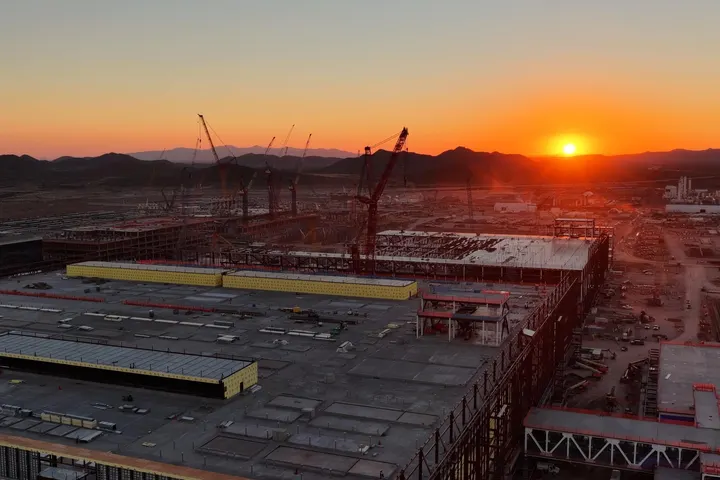
گسترش سریع مراکز داده و تأسیسات مرتبط با فناوری در ایالت خشک آریزونا، موجی از اعتراضات مردمی را به دلیل مصرف بالای آب به همراه داشته است. در حالی که کارخانه تولید تراشه TSMC پیشتر با استقبال مواجه شده بود، پروژههای جدید مراکز داده با مقاومت شدید جوامع محلی روبهرو شدهاند.
ظهور تأسیسات صنعتی بزرگ در دل صحرای آریزونا، اگرچه برای اقتصاد منطقهای دستاوردهایی به همراه داشته، اما نگرانیهای عمیقی را درباره بحران آب ایجاد کرده است. کارخانه تولید نیمههادی TSMC که روزگاری به عنوان ناجی اقتصادی فینیکس استقبال شد، روزانه میلیونها لیتر آب مصرف میکند. با این حال، با معرفی پروژههای جدید مراکز داده مقیاسپذیر برای پشتیبانی از زیرساختهای فناوری و هوش مصنوعی، ائتلافهای مردمی و محلی به شدت در برابر این طرحها موضع گرفتهاند.
بسیاری از ساکنان و فعالان محیط زیست نگران هستند که افزایش تقاضا برای آب و انرژی در پی خشکسالیهای مداوم و کاهش سهمیه رودخانه کلرادو، آینده منطقه را به خطر بیندازد. شرکتهای توسعهدهنده تلاش کردهاند با وعدههایی نظیر استفاده از آب بازیافتی و ساخت زیرساختهای جدید اعتماد عمومی را جلب کنند، اما این توضیحات نتوانسته از خشم عمومی جلوگیری کند. اعتراضات گسترده در شهرهایی نظیر توسان نشان داد که شهروندان نگران تأثیر این تأسیسات بر منابع آبی نسلهای آینده و افزایش دما در منطقه هستند.
AI has come for Arizona’s water
A hulking gray giant rises from the desert. Inside, engineers create the force behind our phones and computers and appliances, our streaming services and search engines and chatbots and vibe-coded apps and websites. The complex is simultaneously massive and squat, dwarfed by the mountains that surround it, and it is endless. I drive past one building, and then another, and then the ground opens up where construction…
A hulking gray giant rises from the desert. Inside, engineers create the force behind our phones and computers and appliances, our streaming services and search engines and chatbots and vibe-coded apps and websites. The complex is simultaneously massive and squat, dwarfed by the mountains that surround it, and it is endless. I drive past one building, and then another, and then the ground opens up where construction crews have dug up the earth so a third building can rise. There is a parking lot, and then another, and then another. There is an empty lot on the other side of the street, full of cars and the occasional food truck to feed the thousands of laborers who are busy transforming this expanse of desert into an industrial park. There is dust, so much of it, choking the air. I stand before the savior of Arizona’s economy. Like all great deities, it demands sacrifice. In the desert, nothing is more precious than water, and water is what must be given — nearly 5 million gallons a day, every day, sourced from Phoenix’s municipal supply. The offering has been well worth it. All of this is the fruit of the Taiwan Semiconductor Manufacturing Company, the world’s leading producer of microchips. Its Arizona operation is the result of a pre-pandemic gamble Phoenix made to revive its sluggish economy , which never quite rebounded from the Great Recession. Now TSMC’s foundry looms over the city’s outskirts. TSMC is a success story, one that some local leaders may have hoped to repeat with hyperscale data center developments. The progression may have seemed natural: The Grand Canyon State is not only home to the largest chip factory this side of the Pacific but also 172 data centers , neither of which faced much pushback. But the newer, larger developments being proposed from Phoenix to Tucson demand more of everything — more water, more power, more land — than Arizonans are willing to give. Where TSMC was welcomed with open arms and the first wave of data centers was largely ignored, new developments are facing mass backlash in Arizona, where a grassroots, surprisingly bipartisan coalition of residents has united against data centers. Now the state has a sixth C, Arizona native Christine Mackay tells me. “Chips.” In reporting this story, I spoke to local activists and economic developers, elected officials and their angry constituents. I sat in on city council meetings where people lined up by the dozens to speak up against data center projects, and in cozy suburban homes where tight-knit groups of former strangers told me about the struggle that brought them together. I pored over maps of Arizona’s dry, cracked landscape with laypeople who, over the past two years, have made themselves experts on zoning and land use and water consumption so they can understand the beast they’re trying to fight. The locals on both sides of this debate claim to want the same thing: a better, more prosperous Arizona. Their visions for achieving it, however, are completely at odds. In Arizona and elsewhere, data center developers have tried to win over locals by making enticing promises about the jobs, tax revenue, and infrastructure they’ll bring with them. All they ask for in exchange is water — and, they swear, not nearly as much of it as you’d expect. Some hyperscale data centers, like Google’s facility in The Dalles, Oregon, use about 1.5 million gallons a day, about one-third of what TSMC’s Arizona complex consumes in the same timeframe. Those reassurances, however, aren’t enough to assuage Arizonans, who now have to contend with the fact that the state will soon lose access to nearly 30 percent of the water it receives from the Colorado River. Even now, as people across the country sour on AI and fight against data centers in their communities, TSMC’s Arizona operation hums along without significant opposition. And yet it’s impossible to make sense of why Arizonans are so opposed to new data center development without first understanding why they eagerly welcomed TSMC, even though both industries must contend with the issue that has plagued Arizona since its founding: There isn’t enough water. For as long as anyone could remember, business in Arizona revolved around the storied “five C’s”: cattle, copper, cotton, citrus, and climate, a catchall for the region’s mild, salubrious winters, which locals say often more than make up for the sweltering summers. Now the state has a sixth C, Arizona native Christine Mackay tells me. “Chips.” The TSMC development is, in a sense, Mackay’s doing. As the head of Phoenix’s economic development office, she spearheaded the effort that brought the Taiwanese giant to the Sonoran Desert. In 2020, while the global economy was all but shut down, TSMC made an announcement. The same forces that brought the world to a standstill had created even more demand for TSMC’s products, and in response, TSMC would be opening an advanced semiconductor foundry — a “fab,” in industry jargon — in Phoenix. Initially, TSMC predicted that it would pour $12 billion into Arizona’s economy by 2029. Since then, TSMC’s projected expenditure in the state has ballooned to $265 billion, what the company touts as the largest foreign direct investment in US history. TSMC just put the finishing touches on its second fab in a formerly desolate swath of north Phoenix, with a third under construction and plans for several more underway. This buildout has been more than a decade in the making. TSMC started shopping around for a US location in 2016. That year, Mackay said, the company put out a request for proposals through a codename. No one won. “We aren’t a group that takes no for an answer,” Mackay said proudly. Her office asked TSMC executives what they thought Arizona was missing, and then spent the next three years addressing their concerns. In 2019, Phoenix sent a delegation to Taiwan to share a new development plan for a science and technology park, the nucleus of which would be a factory, ideally one of TSMC’s fabs. “They agreed they needed to come back and take another look at Phoenix,” Mackay told me. Her team showed them two locations: Laveen, Arizona, a suburb southwest of Phoenix, and, just north of the city, an undeveloped area roughly the size of Manhattan called Biscuit Flats, so named, Mackay told me, because “it’s as round and flat as a biscuit.” “That very day,” she recalled, “they said, ‘This could work.’” What followed was a flurry of development unlike anything the state has ever seen. TSMC has brought more than 3,500 jobs to the state, and an entire economy has sprung up to support the company’s Arizona operation. Much like in Taiwan — where the company accounts for nearly one-tenth of Taiwan’s gross domestic product — TSMC has become, if not the center of the universe, then at least a galaxy unto itself. The company controls an estimated 70 percent of the global chip market, and its contracts with Apple and Nvidia alone make up more than one-third of its annual revenue. (Apple and Nvidia design their own chips, but they don’t produce them. The complex manufacturing process is instead largely outsourced to TSMC.) TSMC has changed swaths of Phoenix — its landscape, its industries — and it has brought with it jobs and prosperity. Locals fear that the new hyperscale data center developments will do the former but not the latter, consuming resources while contributing little to the community. Mackay, who has worked as an economic developer for over 30 years, didn’t experience significant pushback when she helped court data center developments in the past. “The first 10 data centers I did look like pretty little office buildings,” she said. The new developments being proposed are neither pretty nor little. Where earlier data centers were inconspicuous, the hyperscale facilities developers want to build in Arizona — often on rural farm or desert land — are both massive and incongruous. Despite the state’s recently acquired reputation for sprawl, there are still plenty of places where, in the quiet desert stillness, you can sometimes hear a pack of coyotes howl in the middle of the night. There are dark-sky corridors and wild animals, ghost towns and saguaro forests. All of this, some locals say, could be sacrificed for the benefit of an industry that also poses an existential threat to humanity. There are ethical questions and environmental ones, debates over zoning and taxes and, most of all, over water. Yet the cities and the outlying suburbs keep growing, spreading in all directions until they’re constrained by geography or bureaucracy or Indigenous sovereignty. And industry, somehow, keeps arriving, thirstier than ever. Year-round but especially in the summers, Arizonans tailor their routines to the elements. Drivers are careful not to get stuck in dust storms or monsoons. Joggers avoid going out in late mornings and early afternoons, when the heat is at its most intense. And on August 1st, at the peak of monsoon season, the No Desert Data Center Coalition’s protest began in the early evening, when the sun’s punishing rays were starting to give way to a muted desert sunset. About a dozen people showed up to the rally on the outskirts of Tucson, in front of the 290-acre site where Beale Infrastructure is building a 600-megawatt data center. Every few minutes, Vivek Bharathan, one of the organizers, reminded the protesters to stay hydrated. Children sprayed each other with water guns and dutifully accepted drinks from their parents. Mayra Duron, one of the attendees, brought a cooler of agua de jamaica to share with the group. The magenta beverage, she said, was full of electrolytes. Water — the lack of it, the need for it, the amount required to build a massive data center in the middle of the desert — was top of mind. A hand-painted banner expressed the overarching sentiment: BEALE’S DATA CENTER WILL SUCK US DRY. “If you feel the heat, please head home,” Bharathan told the small crowd. “It is a hot day, and if they succeed in building a data center here, it’ll be even hotter. We know these things create heat islands that can affect the surrounding area by over 10 degrees Fahrenheit.” Duron, a local macrame artist who incorporates cactus spines into her weaving, said she worried about how rising temperatures would affect the region’s saguaros. “In Phoenix, it’s hyper-industrialized,” she said, “and they’ve seen saguaros die left and right.” Cars honked in support. Some drivers pumped their fists out their windows as they sped by. Arizonans weren’t riled up about AI in 2019, when the TSMC project was announced, nor did they notice or care much about the previous data centers that were quietly built throughout the state. Things have changed. Tucson, it appears, is united in its opposition to the data center complex dubbed Project Blue. But the buildings are going up anyway. “We take it as normal because it’s been that way for so long. But it isn’t normal. It’s a catastrophe.” Information about Project Blue began slowly trickling out in the spring of 2025. First came the name, and some clues : The development, whatever it was, would be on a county-owned plot of land; it would create 3,000 temporary construction jobs and 200 well-paying positions down the road; it would generate $152 million in tax revenue over the next decade; it would be big, and it would be thirsty, and new water lines would be built to keep it satiated. That was all anyone in the know would say, because the county government, which owned the land, signed a nondisclosure agreement with the would-be developer. The news came out in a mundane, bureaucratic way, as information about prospective land sales in midsize cities often does. In June 2025, Jan Lesher, the Pima County administrator, submitted a 44-page memo to the Board of Supervisors. The words “data center” did not appear until the fourth page. This data center would provide an “unprecedented” $3.6 billion opportunity for Tucson and for the county. There were other details, and there was flattery, and there were promises. Project Blue would use “100% renewable water resources.” Its developer, Beale Infrastructure, would build critical infrastructure at its own expense, including an 18-mile pipe extension and an aquifer recharge facility. “The boost it could provide to our local economy may well be transformative,” Rex Scott, one of five members of the County Board of Supervisors, said at the time . His colleagues were split. They voted 3-2 to rezone the 290-acre tract, and voted again to sell it to Beale for around $20 million. But it wasn’t a guarantee yet. One of the terms of the deal required Tucson to annex the land and approve the sale, since the city would be on the hook for the land’s water service. The honeymoon, if there even was one, didn’t last. Just hours after the board’s vote, Tucson Electric Power announced it was looking into a rate hike that would increase customers’ bills by an average of 14 percent. The utility claimed the decision was unrelated to the forthcoming data center. Even still, one of the commissioners who voted to rezone the land and sell it to Beale officially asked to reconsider the rezoning. Perhaps it was the fact that Tucsonans learned of the data center and the rate hike in such quick succession, coupled with the inescapable news of data centers raising locals’ utility bills , that catalyzed their mass opposition. Maybe it was the Arizona Mirror ’s report that Project Blue, combined with another proposed data center, would not only be TEP’s biggest customer but also consume more than four golf courses’ worth of water each year. The fact that Amazon Web Services was reportedly the end client — and that county officials had been discussing the project since 2023, and, according to public records obtained by Arizona Luminaria , signed NDAs prohibiting them from naming the companies involved — certainly didn’t help. Whatever the reason, Beale executives probably weren’t prepared for just how angry the public would be. Around 200 people showed up to a public information meeting Beale hosted in the auditorium of a local high school in July 2025. Most of them were furious about the data center, or they were worried, or they were scared. Tensions were even higher at the follow-up meeting held at the Tucson Convention Center. Over a thousand people showed up. The boos started before Beale’s representatives got through their introductions, and they continued throughout the night. Keri Silvyn, one of the attorneys representing Beale, tried to warm up the crowd. “We all have cellphones, we have computers, a number of us have multiple of those in our households,” she said. “Many of the various signs that I’ve seen have QR codes, that if you click on, will take you through a data center in order to get to different sites. The internet is housed in data centers. That’s what they are.” Beale’s team explained that they selected the site because it was far from residential areas, and then they reiterated the now familiar pitch data center developers make to wary communities. Beale said it would pay for a pipeline, and once the pipeline was built the data center would run on reclaimed water. (Until then, however, it would rely on potable water.) The company would pay to clean up contaminated water. It would inject any extra water into local aquifers, eventually making the whole thing “water-positive.” None of this mollified the thousand or so people in the audience, who booed every few minutes. To no one’s surprise, the opposition mostly came down to water. Locals worried that if the data center came to town, the resource, already so scarce and so precious, would vanish. They cited the fact that Arizona would likely lose more of its Colorado River allotment. They conjured images of even hotter, drier summers. “Can you guarantee us water for future generations?” When it was her turn to speak, Melanie Cooley, an education specialist at the Watershed Management Group, a local habitat restoration nonprofit, conjured up a past familiar to few Tucsonans. “Where we are sitting right now was a forest 125 years ago that adjoined a flowing river that flowed year-round,” she said. “There are people alive today who grew up swimming in the Santa Cruz River.” Average temperatures in Tucson are now 11 degrees Fahrenheit higher than they were a century ago, Cooley said. About six degrees of that rise can be attributed to global warming. The other five, Cooley explained, are because of changes in the local ecosystem, including the felling of forests and the drying up of rivers like the Santa Cruz. “What we see today when we drive across that river that looks like a big, dry ditch, we take it as normal because it’s been that way for so long. But it isn’t normal. It’s a catastrophe. It’s a catastrophe that was brought on by overpumping of our groundwater and bad development decisions, and Project Blue is another bad development decision.” Another speaker compared Project Blue to industrial projects of decades past. “This is like déjà vu for me,” he said, listing off economic development projects that were supposed to turn things around for the city: Raytheon; Hughes, the military contractor that preceded it; the Air National Guard. “What did they do? They contaminated our water. To this day, we’re having to deal with that.” Tucsonans had gone to great lengths to conserve their water. “We took our landscaping out, we took our swimming pools out.” He waved over a relative who was holding an infant in a sling. “Can you guarantee us water for future generations?” he asked the Beale representatives. “Can you guarantee water for her generation, my kids’ generation, my grandkids’ generation, and this little baby’s generation?” Two days after this contentious hearing, a unanimous vote by the Tucson City Council shut down the annexation of the land. At a subsequent meeting, the city adopted new rules for data centers and other large water users. Residents were relieved, but not for long. Three weeks after the city stopped the annexation, effectively killing the development, local reporters confirmed that Beale was moving forward with the data center anyway. County officials and Beale representatives had previously said that the deal was contingent on Tucson’s annexation of the land. Suddenly that was no longer an issue. (Beale declined to comment on why annexation was no longer necessary for the deal.) Over time, there were other adjustments to the plan: The data center would no longer be water-cooled and would instead rely on closed-loop air cooling. If the shift was intended to win over Beale’s critics, it didn’t work. Members of the No Desert Data Center Coalition claim that air-cooled facilities use more electricity, and, since power plants also use water to cool their systems, air-cooled data centers may actually be more water-intensive, just indirectly, an allegation Beale denies. “The use of air-cooled technology for this project does not increase overall energy use; while the energy allocation is different, the energy use is the same,” Beale spokesperson Tony Burkart, the Beale spokesperson, told The Verge . (Energy generation does require water, though there’s little data on just how much water Arizona’s power plants consume.) The change also cost Beale a tenant: Amazon reportedly pulled out of the project , saying an air-cooled facility wouldn’t meet its needs. Beale declined to disclose whether it has since found a new tenant for Project Blue. “It’s up to our tenants when they choose to announce their investment in a project,” Burkart said. Still, the project moved forward. The county completed its deal with Beale on Christmas Eve, and Beale promised to bring even more gifts in the form of $15 million in donations, some of which would go toward local STEM and trade school programs. The new year brought more challenges. The state’s attorney general filed an appeal against the Arizona Corporation Commission , the state agency that oversees public utilities, over its approval of a special energy agreement between Beale and TEP. Members of the No Desert Data Center Coalition filed a separate lawsuit alleging that the county’s dealings with Beale violated the state’s open meeting law. The coalition’s suit got tossed, but the data center’s opponents found other ways to voice their displeasure. They staged a protest inside the offices of Lazarus and Silvyn, the law firm representing Beale in its dealings with the county. When construction crews broke ground on the site, dozens of people were there, blocking vehicles while chanting, “We respect the workers, we don’t respect the work.” The data center’s opponents haven’t been able to stop construction altogether, but they’ve managed to slow it. After observers affiliated with No Desert Data Center noticed that contractors with Ames Construction were using city-owned hydrants , officials demanded that Beale give the city water credits to replenish the approximately 651,702 gallons of drinking water used for dust control. (A host of local ordinances require construction crews to spray water to mitigate the air pollution caused by blowing dust.) Burkart, the Beale spokesperson, said the contractor “followed standard procedures and the City issued a permit for temporary water per the normal course of business.” After Ames stopped using city water, officials with the Pima County Department of Environmental Quality also found the contractors in violation of their “fugitive dust permit” on two separate occasions , each of which could carry a fine of up to $10,000. And when Ames turned to a Tucson green waste facility for water, protesters flooded the subcontractor with phone calls until its owner dropped the contract. None of this grassroots opposition, however, has been enough to actually stop Project Blue. To facilitate construction, the Arizona Department of Water approved a request to build two wells on the site, allowing the facility to draw up 31 million gallons of groundwater a year. Burkart said this water will only be used for construction. Once the data center is up and running, Burkart said, water use “will be limited to ordinary domestic purposes, such as restrooms, employee kitchens and health and safety.” Some local leaders have since worked to regain the community’s trust. After a contentious meeting in August, the Tucson City Council implemented new, stringent limits on data centers , making them one of the most regulated developments in the city. But residents want more, and they’ve vowed to keep showing up until they get a full ban. Even the county government has been surprisingly amenable of late. In September, the Pima County Board of Supervisors imposed a 120-day moratorium on new data center projects. But that doesn’t mean other developments are off the table. In March, the county announced it would be putting some of the proceeds of the Beale land sale toward hiring an economic developer. The goal of the job, which comes with an annual salary of $150,000, would be to bring foreign direct investments to Tucson. The city, it seems, is looking for a Christine Mackay of its own — and maybe a TSMC, too. Rebecca Chen understood the promise of TSMC well before most other Arizonans. A Phoenix resident since 2015, she started working as a Realtor in 2019, just before the company arrived. “TSMC may not be a huge household name for a lot of Americans, but it is for Asians,” Chen said. “TSMC is basically like Apple or Tesla for Taiwanese.” The covid-19 pandemic sent the industry into a frenzy: Americans, largely confined to their homes, wanted space and sunshine and relocated to the Sun Belt in droves, and Arizona was no exception. Still, Chen knew this was nothing compared to what TSMC would bring. She was introduced to her first Taiwanese client by an industry friend in California, and soon the referrals were piling up. She sold homes virtually, showing them to clients via video call; some TSMC workers bought houses sight unseen. “I feel like I’m way more than a Realtor,” Chen told me. “I’m like a guide to them.” She’s helped clients set up utility bills, get their driver’s licenses, recommended places to eat and shop. “I’m an immigrant myself,” she explained, so she knows how hard it can be to feel settled in a new place. Arizona’s Taiwanese immigrants have risked a lot in coming to America, staking their futures on a new project in an unknown place at a time of extreme nativist backlash. It’s a leap of faith, and it appears to have worked out. TSMC’s presence in Arizona has revived a way of life some thought had vanished in America: a prosperous household where one partner (usually male) works at a factory and earns enough to support a family. Think of it as the midcentury ideal with a new global twist, suburban idyll propped up by industrial manufacturing. TSMC now has more than 3,500 employees in Arizona, according to spokesperson William Moss, who said the company doesn’t disclose the number of international workers it has, which can fluctuate depending on the project. Early reports claimed that about half of TSMC’s 2,200 employees at a single fab were from Taiwan. Still, it’s undeniable that TSMC’s presence in Arizona has led to an influx of Taiwanese immigrants in the Phoenix metro area — all while the Trump administration wages a full-fledged attack on legal immigration. TSMC is now working to cultivate local talent. In May, the company announced it was starting a semiconductor technician training program at Arizona State University, and the university recently signed on to a White House initiative to build up America’s manufacturing workforce. As part of the partnership, ASU will organize a “Foundry School” taught by experts from Japan, South Korea, India, and Taiwan. New businesses have popped up to cater to Arizona’s growing Taiwanese community, further bolstering the local economy. North Phoenix now has a Little Taipei . Restaurants have opened to cater to these new Arizonans, some opened by the newcomers themselves. Buildings have popped up seemingly overnight to house them. Mandarin-speaking real estate agents like Chen have found a lucrative niche selling luxe new-build homes to well-compensated tech workers, including employees of TSMC suppliers. The state has added a new holiday to its unofficial calendar: October 10th, or Double Ten Day, a commemoration of the uprising that felled the Qing dynasty. Phoenix is now home to the largest Double Ten celebration in North America. Each year, thousands of spectators ooh and aah at a drone show sponsored by TSMC. China Airlines started offering direct flights between Phoenix and Taipei in 2025. Taiwan’s Starlux Airlines soon followed suit. The Hilton Garden Inn I stayed in, located just 10 minutes from the TSMC campus, served congee for breakfast. Scottsdale now has a Din Tai Fung. Reservations are hard to get. “We call it the economic value of a gallon of water.” Some of these changes happened organically; others resulted from meticulous planning. Mackay, the economic developer, told me that the local grocery chain Fry’s reached out to her office to ask what products Taiwanese customers might want to see on its shelves. Mackay set up a meeting between Fry’s and TSMC, and she set up another with a Taiwanese attorney who worked with the state Department of Transportation to ensure Taiwanese immigrants’ driver’s licenses would be valid in Arizona. Working along Phoenix Sister Cities, a nonprofit that started in 1972, Mackay’s office put together a team of Mandarin-speaking doctors and nurses to serve Taiwanese immigrants in their native language. Phoenix and Taipei have been sister cities since 1979, a designation that, until recently, was largely ceremonial. As is the case in all sororal relationships, there have been conflicts, some of them over shared resources. Given the industry’s demands and the state’s historic drought, critics ask, is it wise to build water-guzzling factories in the middle of the desert? TSMC hasn’t faced nearly as much pushback for its water use as data centers have, but semiconductor manufacturing nonetheless requires massive amounts of water, and this water must be of a specific grade — free of contaminants organic or otherwise, and so devoid of minerals that it’s actually not recommended for human consumption. It takes 1.4 to 1.6 gallons of municipal water to create a single gallon of ultrapure water, since some is inevitably lost to evaporation in the process. Each chip requires 50 to 250 wash cycles, Paul Westerhoff, the director of ASU’s Global Center for Water Technology, told me. “If there’s a little particle in there, or an ion-like chloride in there, the thing doesn’t work,” Westerhoff said, “so they need to use a lot of water in each of these cleaning cycles.” This process requires 4.75 million gallons of water each day, which TSMC obtains through Phoenix’s municipal water supply. The Arizona Republic reports that TSMC mostly uses reclaimed wastewater, with some groundwater as well. Westerhoff compared the process of semiconductor manufacturing to washing dishes. And just like you wouldn’t reuse your sink water to wash a second round of pots and pans, chip manufacturers can’t reuse their dirty water to wash other chips. But this water isn’t totally lost. “If you want to reuse sink water, maybe you throw it out on your lawn,” Westerhoff said. He explained that TSMC uses 20 percent or so of its recycled water to power its evaporative cooling systems. Part of Westerhoff’s role is to figure out new ways for TSMC to use its excess wastewater — hopefully, someday, as part of the chip manufacturing process itself. Sarah Porter, the director of ASU’s Kyl Center for Water Policy, explained that while 15 to 20 percent of the water TSMC uses is lost to evaporation, much of the rest is processed in the company’s recycling plant. According to Porter, TSMC recycles 60 to
Source report: The Verge.
گزارش فارسی این خبر با کمک هوش مصنوعی و فقط بر اساس اطلاعات منتشرشده در منبع تهیه شده است.