آیا اپلیکیشنهای پیشبینی مرگ مبتنی بر هوش مصنوعی اضطراب میآورند یا آگاهی؟
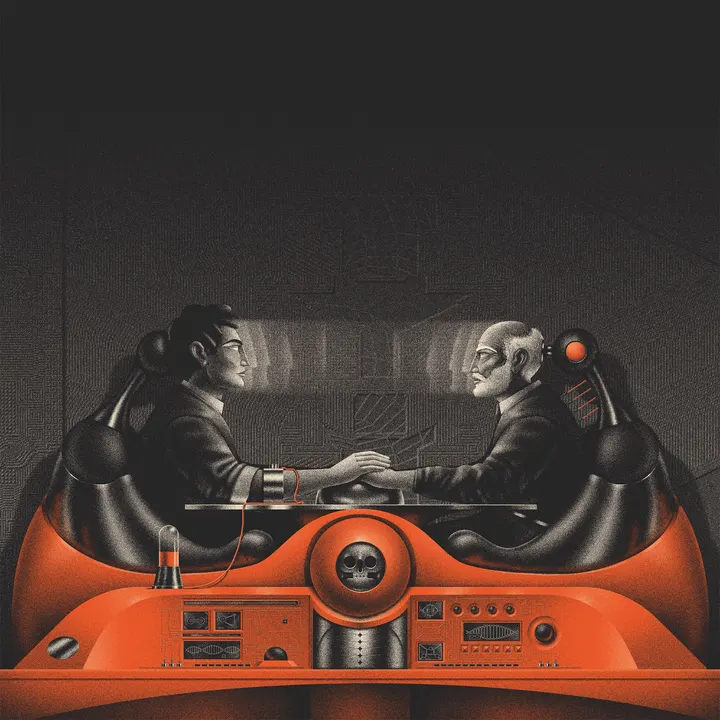
یک نویسنده با استفاده از اپلیکیشن هوش مصنوعی Death Clock که ادعا میکند طول عمر را پیشبینی کرده و راهکارهای سلامتی ارائه میدهد، تجربهای یکماهه را از رصد دقیق شاخصهای حیاتی بدن خود ثبت کرده است. این تجربه نشان میدهد که تلاش برای بهینهسازی زمان و فرار از مرگ بیشتر به اضطراب کاربران دامن میزند.
اپلیکیشن Death Clock با استفاده از هوش مصنوعی و بر اساس دادههای پزشکی و سبک زندگی کاربران، زمان احتمالی مرگ آنها را تخمین میزند و برنامههای پیشگیرانهای برای افزایش طول عمر ارائه میدهد. این اپلیکیشن با دریافت هزینه برای پنلهای بیومارکر و آزمایش خون، توصیههای سلامتی تولید میکند. با این حال، کارشناسان آمار و سلامت معتقدند که پلتفرمهای آگاهی از مرگ توهمی از قابلیت کنترل خطی بر روی طول عمر انسان ایجاد میکنند که در نهایت به وسواس ناسالم برای خودبهینهسازی منجر میشود.
تجربه یکماهه استفاده از این اپلیکیشن نشان داد که شمارش معکوس مداوم برای مرگ و رصد وسواسگونه عملکردهای بدنی، به جای کاهش اضطراب، نگرانیها را تشدید میکند. پژوهشها حاکی از آن است که نگرش مثبت به پیری نقش مهمی در طول عمر دارد، در حالی که شمارش معکوس مرگ ممکن است پیری را به عنوان یک فقدان جلوه دهد. در نهایت، کاربر تصمیم گرفت نوتیفیکیشنهای این اپلیکیشن را خاموش کند و به جای بهینهسازی زمان، بر کیفیت روابط و زندگی خود تمرکز کند.
I Gave My Blood to the AI Death Clock
Death Clock promises to predict when you’re going to die and help you extend your time on Earth. After a month, I felt like it was sucking the life out of me.
I am scheduled to die on August 10, 2060, at the age of 74.
So says my iPhone screen, where Death Clock, an AI-powered longevity app that predicts life expectancy based on your medical habits and lifestyle, has produced an image of a smiling grim reaper to celebrate my expiration date. There he was one September morning, looking especially thrilled about the reveal, gesturing with a peace sign as he reclined in a doughnut-shaped pool inflatable under that giant number: 74.
I have never resented getting older, but I suppose that’s younger than I’d like to be when my time is up. In the last four years—years that brought the passing of my grandmother and aunt within 18 months—I’ve become hyperaware of how finite my days are. Since turning 40 in January, I’ve also experienced daily reminders of aging: inexplicable pains that rotate between my back, neck, and hips. Spiritually, I feel young; physically, my body screams otherwise. Aging is natural, but I had a creeping suspicion I could buy myself more time.
Our collective obsession with life extension has given rise to a multitrillion-dollar longevity industry, bolstered by wannabe prophets like Bryan Johnson. Threats like climate change and AI doomerism only seem to have intensified existential fears, even as LLMs promise a new era of personalized medicine to address any health issue. Track enough pieces of data, the thinking goes, and algorithms can help you hack your own demise.
All of which led me to Death Clock, an app launched in 2024 aimed at tracking users’ health habits in an attempt to prolong their lives. In February, the company announced a new feature that lets you order biomarker panels. For a $69 subscription, you can get a basic blood panel that measures things like cholesterol, blood sugars, inflammation, vitamin D, and blood and organ health. There are also nine additional tests—assessing everything from hormones and micronutrients to your thyroid—that, altogether, cost $780. I opted for the routine blood panel and added the “stress” test ($29). Maybe some new insight could help me get a handle on it.
In an attempt to be more than another morbid countdown gimmick, Death Clock says it’s trained its AI on 1,200 longevity studies, actuarial data from life insurance companies, and life expectancy tables. Based on your results, its algorithms create a detailed prevention plan intended to help extend the time you have left.
Frankly, I was skeptical that anything meaningful would actually come from this. I was also, I can admit, a little fearful that I’d learn something I didn’t want to, a fact that might dissolve the little sanity I had left in a year that had already brought its share of unexpected problems.
After filling out an initial health questionnaire, a notification buzzed, forewarning my demise. There are three ways I will likely perish, it said: cardiovascular disease, a sleep disorder, or cancer (it doesn’t specify which type). This means, according to the app, I have already “completed” more than half of my existence on this mortal plane. A few days later, when I noted that my family has a mild history of diabetes, the app updated my age of death from 74 to 73.
And just like that, I lost a year.
I know I won’t live to be 100; people in my family generally croak in their early eighties. But was it possible to extend my lifespan by 10, even 15 years, with a hyperpersonalized plan? “You have two paths,” a message from the app exclaimed. “We are here to help you achieve the longer one.” I made an appointment with Quest Diagnostics, one of the two labs the company has partnered with, and willingly gave Death Clock my blood.
There’s no shortage of products that aim to reshape our relationship to our bodies. My inbox overflows with emails from longevity zealots pitching the latest anti-aging fads: salmon sperm scalp injections, a platelet-rich plasma treatment “Hailey Bieber swears by.” It’s almost too much, this urge to cheat the natural order of time.
“That’s a fool errand,” Death Clock CEO Brent Franson tells me one afternoon. He says advocates like Johnson—whose mantra “Don’t Die” reads more like a rejected Nike slogan than a wellness-oriented affirmation—“have to be really careful about inferring immortality when you have something to sell. That’s a dangerous place to be. The reality is we’re all going to die. It’s a question of when.”
Over Zoom, all I can think about is what Franson is trying to sell me.
The longevity market is projected to reach $8 trillion by 2030, meaning the future of health care may be shaped less by traditional treatment and more by personalized AI health services. With Doctronic, a HIPAA-compliant platform that works like a personal AI doctor, people can refill prescriptions without the need to see a human physician, while apps like Superpower and Lifeforce (similar to Death Clock) offer membership-based health insights and clinician-reviewed recommendations. Twin Health purports to create an AI replica, whatever that means, of a person’s metabolism. All of it is meant to help us live a little longer, though it’s unclear exactly how and at what cost.
Mike Ludkovski, a professor of statistics and applied probability at UC Santa Barbara whose research focuses on longevity analysis, says mortality awareness platforms like Death Clock “sell the illusion that individual lifespan is a linear process” that can be hacked. A 2024 Aging Cell study likewise suggested that an aging clock shouldn’t be treated as a measure of someone’s overall biological age. “Ultimately, individual-level triggers precipitating death are inherently random and will never be truly forecastable,” Ludkovski says.
I ask Franson if we’re actually getting healthier or just growing more anxious about being unhealthy. “I think both,” he says. “There’s a very unhealthy obsession with self-optimization—tracking everything, trying to control everything.”
Wasn’t Death Clock, in part, also guilty of that?
When the blood panels returned a week after I gave my sample, the results were mostly what my doctor had warned me about earlier this year. I’ve got borderline high cholesterol and blood sugar levels “creeping toward prediabetic range.” Shockingly, I have “optimal liver health” and normal cortisol levels. Videos from so-called wellness influencers had convinced me that a string of recent sleepless nights were the result of high cortisol, but, it turns out, the algorithm isn’t always right.
Based on my results, the app kept feeding me more tasks. Increase my vitamin D3! Schedule a DEXA scan for bone density! Discuss a prostate-specific antigen screening with a specialist! Despite Franson’s claim that he wants Death Clock to eventually be a replacement for primary care physicians, the app kept nudging me to discuss my results with a doctor.
Ultimately, I started to realize, tracking health data can only do so much. There is a belief, says Gretchen Terry-Leonard, author of Your Second Prime: Does Aging Suck, or Do We Suck at Aging?, that being able to measure something means it can also be managed. Death doesn’t work that way, she says, “so the measuring starts to serve a different need: the need to feel less afraid.”
Terry-Leonard is also the cofounder of the Center for Deeply Human Leadership, an independent research institute studying AI’s effect on brain health. She’s skeptical that consumer-facing longevity apps can lead to positive behavioral shifts on their own. “Facts don’t change minds,” she says. People understand that certain activities are unhealthy, but they do them anyway.
Keeping death in view is one of the oldest practices we have, and what seems to matter is whether a person feels they have the personal agency to make the necessary adjustments in their life. Researchers who study how thoughts of death shape health choices find that people move toward healthier behavior when they also have the confidence and resources to act, which not everyone does. “And without those,” Terry-Leonard tells me, “the anxiety tends to go into protecting how we feel about ourselves rather than into our health.”
While researching her book, Terry-Leonard found that older adults with more positive attitudes about aging lived an average of seven and a half years longer than those with negative outlooks. An app with a death countdown “can quietly teach us that aging is loss,” hindering longevity rather than promoting it.
In the month that I used Death Clock, this was the fact I couldn’t completely escape. I became a meticulous steward of my bodily functions, logging “daily habits” with the verve of an accountant manically calculating numbers just before tax deadline. In a single day I added 5.8 years to my life by earmarking that I’d completed at least 30 minutes of strength training, abstained from alcohol, brushed and flossed my teeth, gotten consistent sleep, spent time in the sauna, and drank more than eight glasses of water. But even as I labored to improve my death date, the clock was always there, counting down. It was an albatross that moved in a single, uniform direction: tick, tick, tick. Time became a burden I was being forced to optimize.
It makes sense that people are preoccupied with the very thing they are trying to escape. The need for control is addictive. But instead of assuaging my anxieties and questions about the great beyond, Death Clock only seemed to amplify them.
As the image of the life I want to build sharpens in my mind, a life that has already unfolded in deliciously unforeseen ways, I realize it has less to do with how I will make things happen and has everything to do with who I want them to happen with. Life isn’t about adding more time, but making it count when we can. I silenced Death Clock’s notifications on my phone and texted a friend: “Let’s meet at 7.”
Let us know what you think about this article. Submit a letter to the editor at [email protected].
Source report: Wired AI.
گزارش فارسی این خبر با کمک هوش مصنوعی و فقط بر اساس اطلاعات منتشرشده در منبع تهیه شده است.