Ford launches a ‘privacy promise’ and explains how and why it uses customer data
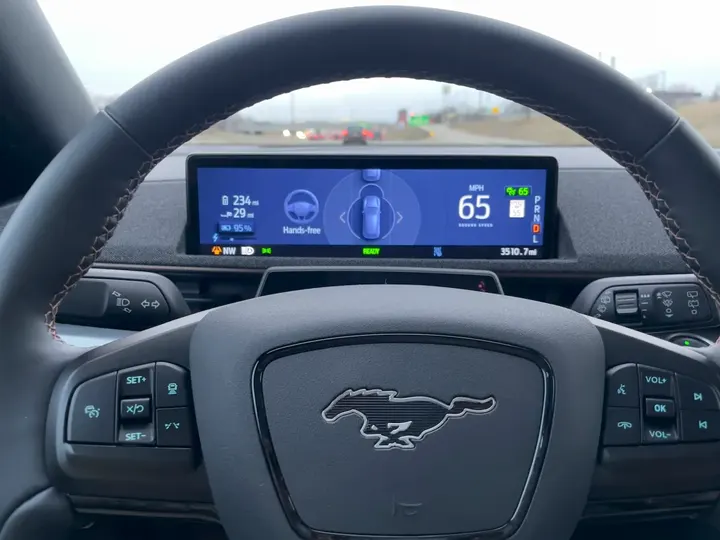
Ford said it's making an "explicit commitment" to its customers that "their vehicle data is safe" with the company.
As Ford prepares to launch a new generation of connected cars, the automaker is making a public promise about how it will handle that information.
The company unveiled on Monday what it calls a “privacy promise” — an “explicit commitment” to keep customers’ vehicle data safe and give them control over what they share. Ford also launched a website designed to educate customers about how, where, and why the automakers uses their data, and to show them how to change those settings.
While those controls have existed for years now, Ford wants to communicate more clearly with its customers about them, especially ahead of the launch of new, more connected vehicles like the ones being built on its upcoming “universal electric vehicle” platform.
“I personally think that it’s super important for us to be making it very clear to our customers what our data practices are, and not only that, but making a commitment to them about it,” Ford’s chief privacy officer Kristin Jones said in an interview with TechCrunch. “I also see this as a great opportunity to educate our customers about how they share data.”
This new privacy push comes as automakers are making their cars increasingly connected. While some polling shows U.S. customers want the kinds of features enabled by this connectivity, such as remote start, navigation, and driver-assistance software, only 14% said they fully understand what data their vehicle collects.
That has left room for some companies to quietly sell that data to third parties — a practice that got General Motors in trouble with the Federal Trade Commission, and also resulted in a $220 million settlement with 36 states last week.
This lack of consumer awareness around data collection and sharing has also opened the door for other companies to market themselves as better stewards of customer data. Slate Auto, the EV startup backed by Jeff Bezos, has made that pitch ahead of the expected launch of its minimalist pickup truck later this year.
“We did a survey of 1,000 consumers, and 91% of them said that data privacy was a key consideration for them. Realistically, it’s not something they engage with every day, but they want to know that they’re, again, in control, and that they have access to the information they need there,” Jones said. “I wouldn’t comment on what our competitors are doing, or anything that’s sort of been in the news there, but certainly it’s something that people don’t trust companies to take care with their data, and we really want to make sure we’re building that trust relationship with them.”
Jones, who joined Ford in 2024 after nearly two decades of working on privacy in the legal, financial, and healthcare fields, said the effort to improve how the automaker communicates with customers about data sharing has been in the works for a while.
“It’s been a journey for, frankly, most of the time I’ve been at Ford,” she said.
Ford’s new website will feature a mix of content that explains what data the company collects, how it uses that information, and how customers can opt in or out.
Opting out of sharing some data will naturally make some modern features inaccessible, Jones said. For example, turning off “connected services” in a Ford vehicle will disable features like real-time navigation and the built-in access to roadside assistance.
But one of the goals of this “privacy promise” push is to better justify why Ford is asking for access to this data and make it clear that the information won’t be used for purposes such as targeted advertising.
Giving Ford access to data about a vehicle’s health, for instance, will provide an owner with better real-time information about whether their car needs maintenance. But it will also “support research and development for future technologies,” Jones said.
“We also do not share information about how our customers are driving their vehicles to data brokers,” Jones said. “I just want to kind of reiterate that we’re not in it to try and monetize data in some way. We’re trying to offer products and services that customers derive value from.”