AI chip smugglers exploit trade control loophole to bring banned HBM from South Korea into China — expensive memory chips packaged with cheap, unsanctioned processors to become legal exports
A memory smuggler has detailed how he gets export-controlled HBM chips from South Korea into China using a loophole. According to The Information , the smuggler owns a chip design firm that build cheap, low-performing processors that fall under the U.S. and South Korea’s export controls. They are then paired with expensive HBM from Samsung and SK hynix, that, on their own, are banned for export to China. But because…
AI chip smugglers exploit trade control loophole to bring banned HBM from South Korea into China — expensive memory chips packaged with cheap, unsanctioned processors to become legal exports
Is it smuggling if it's technically legal?
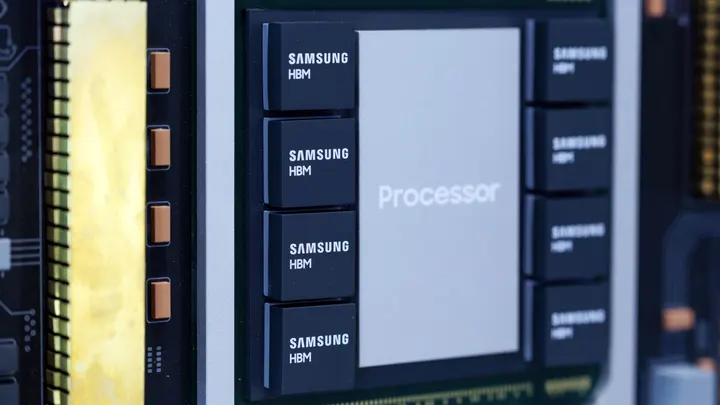
A memory smuggler has detailed how he gets export-controlled HBM chips from South Korea into China using a loophole. According to The Information, the smuggler owns a chip design firm that build cheap, low-performing processors that fall under the U.S. and South Korea’s export controls. They are then paired with expensive HBM from Samsung and SK hynix, that, on their own, are banned for export to China. But because export control rules only look at the performance of the server processor and not at the other components attached to it, this allows the HBM chips attached inside them to slip under the radar and make their way into China.
It’s not a risk-free operation, though. Once the mediocre processors with high-end memory chips land in Hong Kong and are smuggled across the border into Shenzhen in the luggage of commuters that cross between the two regions daily, they end up in workshops where technicians heat up the boards to soften the solder, gingerly lift the crucial memory chips, and discard the rest of the components. Despite having a high failure rate, the high price of HBM chips makes the procedure quite lucrative.
A Shenzhen-based chip broker has been making big money matching up suppliers such as the smuggler and companies that are desperate for HBM. “A year ago, a single HBM3E unit changed hands in China for several hundred dollars,” he tells the publication. “Today it’s about $4,000.” With an AI chip requiring six to eight high-end memory chips, that means the broker is raking in $24,000 to $32,000 for every AI GPU.
Chinese AI labs face this exact memory chip bottleneck when acquiring AI GPUs. While Chinese memory manufacturer CXMT has already begun risk production of HBM3E and is expected to mass produce them by the end of this year, it’s still reportedly suffering from low yield, which makes their chips expensive to produce and procure. We see this with Huawei’s Ascend 950DT, its current top-of-the-line processor that goes for about $37,000 — it offers similar pricing to Nvidia’s B200 AI GPU but only delivers half the performance of the previous-generation H100.
Huawei has reportedly said that its next-generation flagship AI processor, the 960DT, would deliver a similar performance as the H100. However, since the company cannot purchase HBM from Samsung and SK hynix, and Chinese memory manufacturers do not have the capacity to supply all its chip demands, Huawei told customers that they have to find the HBM that these servers need themselves. This would further fuel the demand for these chips, increase the price and make it more lucrative for smugglers to set up similar operations.
But given that this method of moving HBM chips into China is becoming more popular, the smuggler fears that South Korean and U.S. authorities would clamp down on their operations soon. Washington has been going down hard on activities like this, and we’ve seen high-profile arrests including some Super Micro executives and the CEO of a California-based tech company. Other countries like Taiwan and Malaysia have been ramping up their anti-smuggling activities, too, so it’s probably just a matter of time before Seoul follows suit.
Follow Tom's Hardware on Google News, or add us as a preferred source, to get our latest news, analysis, & reviews in your feeds.
Get Tom's Hardware's best news and in-depth reviews, straight to your inbox.
Jowi Morales is a tech enthusiast with years of experience working in the industry. He’s been writing with several tech publications since 2021, where he’s been interested in tech hardware and consumer electronics.